Android Ecosystem Fragmentation Presents Ongoing Hurdles for Real Money Gaming Software Developers
Freya Fischer · Oct 31, 2026
Android Ecosystem Fragmentation Presents Ongoing Hurdles for Real Money Gaming Software Developers
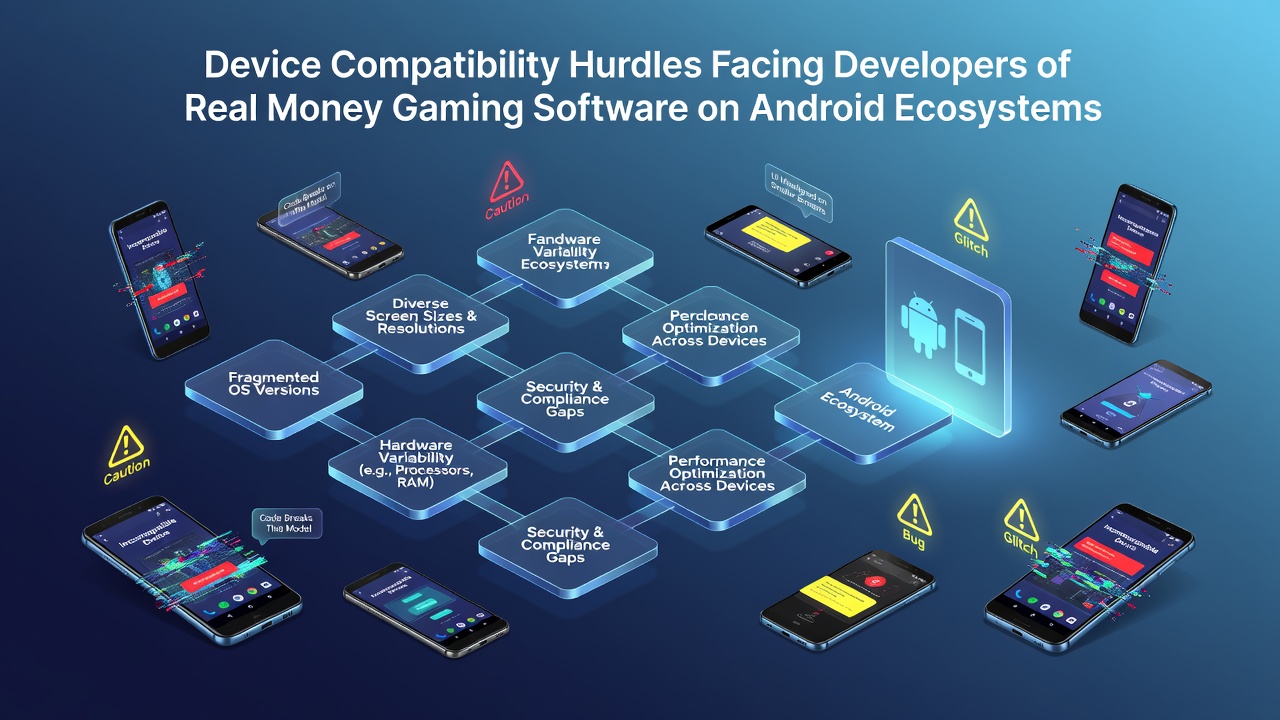
Android device diversity continues to challenge developers who build real money gaming software, as the platform spans thousands of hardware configurations from multiple manufacturers and runs across numerous operating system versions at any given time. Data from the Android Open Source Project shows that fragmentation stems from differences in processors, display resolutions, memory capacities, and update schedules that vary by carrier and brand, creating situations where an application functions correctly on one handset yet encounters crashes or performance issues on another. Those who develop for real money environments must account for these variables because regulatory compliance demands consistent security features such as encryption standards and secure payment processing across every supported device.
Core Technical Barriers in Hardware and Software Layers
Manufacturers customize Android builds with proprietary drivers and user interface layers, which means developers encounter inconsistent behavior in graphics rendering, touch input handling, and background process management when testing real money applications. Research from academic studies on mobile platform compatibility indicates that GPU variations often produce rendering artifacts or frame rate drops during intensive game sessions, forcing teams to implement multiple code paths for different chipsets. Screen aspect ratios and pixel densities further complicate interface scaling, since an element positioned correctly on a standard 1080p display may overlap critical controls on devices with taller or ultra-wide formats common in recent flagship models.
Operating system version distribution adds another layer of complexity, because many older handsets continue receiving security patches without full feature updates, leaving gaps in API support that real money software relies upon for authentication and transaction logging. In October 2026, developers noted that a significant portion of active Android devices still operated on versions released two or more years prior, according to aggregated telemetry shared by platform analytics firms. This lag requires applications to maintain backward compatibility while integrating newer security protocols demanded by payment processors and regional oversight bodies.
Testing Demands and Resource Allocation Pressures
Comprehensive testing across device fleets requires substantial infrastructure investment, since automated frameworks cannot fully replicate real-world network conditions, sensor interactions, or thermal throttling behaviors that affect gameplay stability during extended sessions. Experts at research institutions have documented that manual verification on physical hardware remains necessary for features tied to location services and biometric authentication, both of which factor heavily into responsible gaming controls. Teams frequently maintain device labs containing dozens of representative models, yet coverage gaps persist because new handsets enter the market faster than testing cycles can accommodate them.
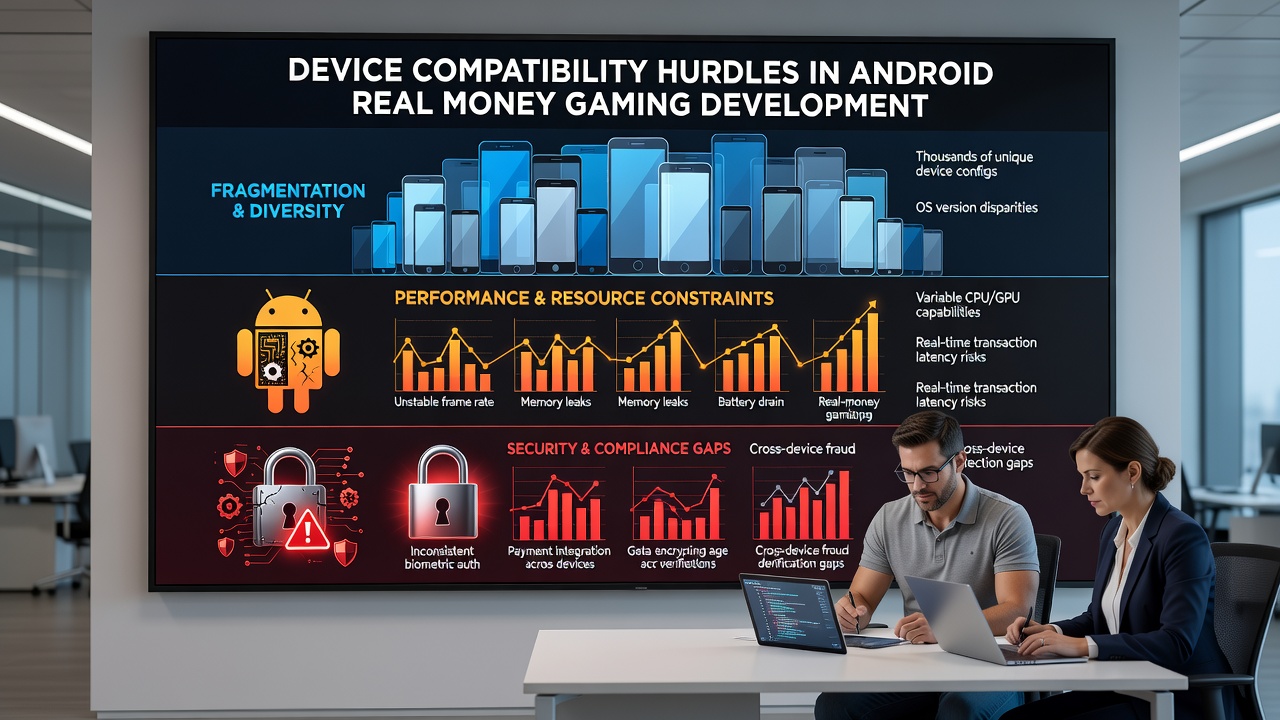
Cloud-based testing services offer partial relief by providing remote access to thousands of configurations, yet latency and limited control over specific hardware revisions limit their effectiveness for latency-sensitive real money interactions. One study revealed that projects allocating fewer than 30 percent of development hours to cross-device validation experienced higher rates of post-launch support tickets related to display or input failures. Those who allocate dedicated compatibility engineers early in the design phase report smoother certification processes when submitting applications to regional app distribution channels that enforce additional technical reviews.
Regulatory and Security Overlaps with Compatibility Requirements
Real money gaming applications must satisfy both platform security guidelines and jurisdiction-specific rules that dictate data handling and transaction integrity, creating situations where a compatibility fix on one device inadvertently violates requirements on another. Government agencies in various regions, including the New Jersey Division of Gaming Enforcement, publish technical standards that reference Android security updates and cryptographic modules, requiring developers to verify compliance on supported configurations. Similar frameworks appear in reports from Australian regulatory sources, which emphasize consistent performance of responsible gaming tools across fragmented device ecosystems.
Encryption library differences and secure element availability vary between budget and premium devices, forcing additional abstraction layers that increase application size and maintenance overhead. Observers note that these constraints become particularly evident when integrating with evolving payment APIs that demand specific hardware-backed keystores present only on newer chipsets. Developers who track Android compatibility definitions published by the platform maintain detailed matrices mapping device capabilities to required features, allowing targeted feature flags that prevent non-compliant experiences from reaching users.
Future Outlook for Mitigation Strategies
Platform initiatives aimed at reducing fragmentation, such as standardized build requirements and extended update commitments from select manufacturers, have produced measurable but uneven results across global markets. Industry organizations tracking mobile gaming adoption continue to compile reports that highlight persistent gaps in lower-tier device segments where real money applications see growing demand. Those who monitor these trends adjust development roadmaps to prioritize configurations representing the largest user bases while maintaining fallback mechanisms for edge cases.
Advances in containerization and modular application architectures allow selective delivery of components based on detected hardware capabilities, reducing the need for monolithic binaries that must function identically everywhere. Research indicates that such approaches lower update sizes and improve installation success rates on storage-constrained devices, although they introduce new verification steps during certification. Continued collaboration between platform providers, device makers, and regulatory bodies remains essential for establishing clearer pathways through the compatibility landscape that real money gaming developers navigate daily.
Conclusion
Device compatibility hurdles in the Android ecosystem stem from structural characteristics of the platform that affect hardware diversity, software distribution, and security implementation simultaneously. Developers of real money gaming software address these issues through structured testing regimens, modular code design, and ongoing monitoring of regional regulatory updates that intersect with technical requirements. Data shows that organizations investing in comprehensive compatibility processes achieve more consistent user experiences and fewer post-release corrections, while those who underestimate fragmentation encounter repeated challenges in maintaining compliant and stable applications across the full range of active devices.